






How Much Does Battery Storage Cost in the UK?
Battery storage in the UK usually costs around £4,000 to £8,000+ installed for a typical domestic system, depending on battery size, inverter setup, installation complexity and whether it is fitted with new solar panels or retrofitted later. Supply-only prices can be much lower, but the installed price is what matters for homeowners and installers quoting a complete job.
Last updated: June 2026.
For installers and technically minded buyers comparing equipment, the main cost decision is not just “how much is a battery?” It is whether the system includes the right inverter, enough usable capacity, suitable protection, compatible monitoring and a sensible expansion path.
At LAMPS, Sync Energy Flow is a useful starting point for domestic battery storage because it gives installers a clear all-in-one route, modular 5.12kWh battery steps and related energy management products. You can view the current Sync Energy options on the relevant LAMPS product pages:
- Sync Energy Flow All-in-One Home Energy System
- Sync Energy Flow Battery Module 5.12kWh
- Sync Energy Solar Power Diverter
Battery storage cost at a glance
| Battery storage setup | Typical UK installed cost | Best suited to |
|---|---|---|
| Small home battery | About £4,000 to £5,500 | Lower electricity use, smaller solar PV systems or limited evening demand |
| Medium home battery | About £5,500 to £7,000 | Typical homes with solar PV and meaningful evening consumption |
| Larger battery system | About £7,000 to £8,000+ | Higher usage homes, EV owners, heat pump properties or larger solar arrays |
| Battery added to existing solar | About £4,000 to £8,000+ | Homes that already have solar PV but need storage added later |
| Standalone battery without solar | About £4,000 to £8,000+ | Homes using time-of-use tariffs to store cheaper off-peak electricity |
| New solar panels plus battery storage | About £10,000 to £14,000+ total | New solar PV installations designed with storage from the start |
These figures are guide prices, not fixed quotes. The final cost depends on the battery model, usable capacity, inverter choice, cable runs, consumer unit requirements, metering, location, commissioning work and the installer’s labour rate.
What affects the cost of battery storage?
1. Battery capacity
Battery capacity is measured in kilowatt-hours, usually written as kWh. A larger battery can store more energy, but it also costs more upfront. The right size depends on how much solar energy the property generates, when the household uses electricity and whether there are high-demand loads such as an EV charger, electric heating or a heat pump.
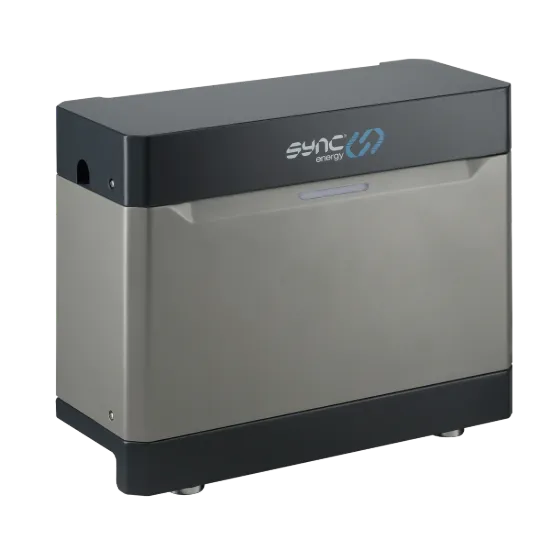
The Sync Energy Flow Battery Module is a 5.12kWh modular battery. Flow battery stacks can be built in practical steps, with 5.12kWh, 10.24kWh, 15.4kWh or 20.4kWh options depending on system design and selected configuration.
2. Inverter and system type
The inverter arrangement has a major effect on the total price. If a battery is installed with a new solar PV system, the installer may specify a hybrid inverter from the start. If the property already has solar panels, the existing inverter may not be compatible with the chosen battery, so an AC-coupled setup or inverter replacement may be needed.
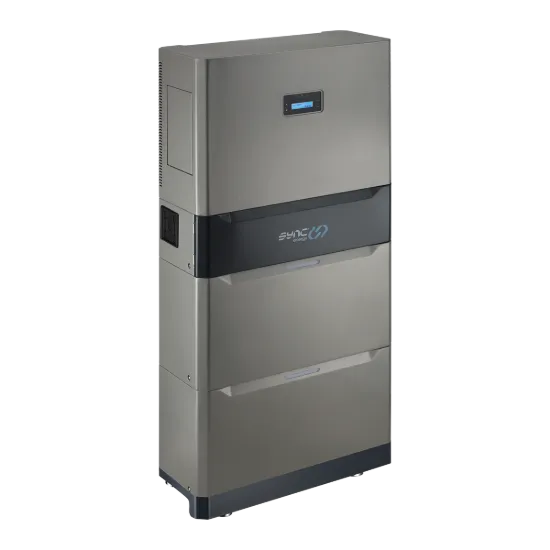
The Sync Energy Flow All-in-One Home Energy System combines a hybrid inverter and battery storage package in one product family. The 3.6kW version is available with 1, 2 or 3 battery module options, giving 5.12kWh, 10.24kWh or 15.4kWh packaged capacities.
3. Retrofit work
Adding a battery to an existing solar PV system can be more expensive than including storage in a new installation. A retrofit may require additional design work, cable routes, metering, isolators, protection, inverter changes or consumer unit work.
For installers, this is why the supply-only battery price should never be treated as the finished project cost. A lower-cost battery module can still become an expensive job if the existing system needs significant electrical changes.
4. Installation location
Battery storage systems need a suitable installation location with adequate space, access, ventilation and cable routes. The mounting method, IP rating, ambient temperature, floor or wall arrangement and manufacturer clearances all affect the installation plan.
Sync Energy Flow products are designed around stacked battery configurations and app-monitored energy management, which can help keep the system layout clear where the property and design allow.
5. Energy management and surplus solar use
A battery is not the only way to use more solar energy on site. Some customers may also benefit from a solar power diverter, especially where they have suitable electric heating loads and want to use excess PV generation instead of exporting it by default.
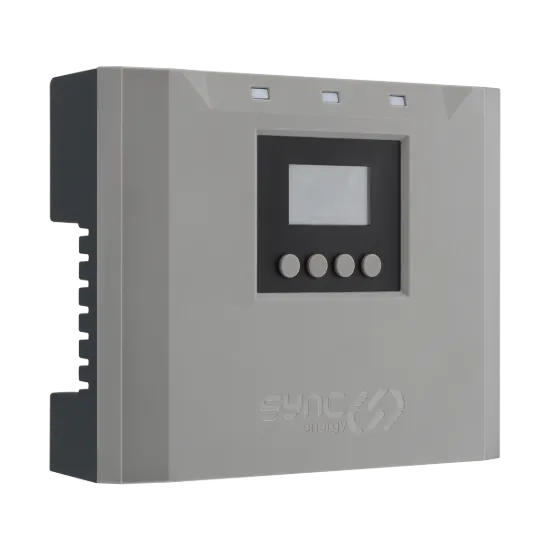
The Sync Energy SEFSD Solar Power Diverter is a 3.7kW single-phase diverter with Wi-Fi, LAN and Bluetooth connectivity. It is designed for indoor home energy installations and uses a CT clamp to monitor household supply.
Supply-only Sync Energy battery storage costs
LAMPS sells solar, battery storage and energy management equipment at trade prices through the website. The figures below are supply-only product page prices shown ex VAT at the time of writing. Always check the product page for current pricing, selected variants and availability before quoting a job.
| Product | Current LAMPS price shown | What it is used for |
|---|---|---|
| Sync Energy Flow All-in-One Home Energy System | £1,949.00 ex VAT | Hybrid inverter and battery storage package with selectable battery options |
| Sync Energy Flow Battery Module 5.12kWh | £1,141.00 ex VAT | Modular 5.12kWh battery module for Flow systems and expansion projects |
| Sync Energy SEFSD Solar Power Diverter | £245.00 ex VAT | Solar power diverter for using suitable surplus PV generation on site |
These product costs do not include the full installed project cost. Installers still need to allow for design, labour, compatible protection, cabling, metering, commissioning, certification requirements and any site-specific electrical work.
Is battery storage cheaper with solar panels?
Battery storage is often more cost-effective when it is planned with a new solar PV installation. The installer can specify the inverter, battery, protection and metering as one system instead of designing around an existing setup.
That does not mean every property should add a battery immediately. If the customer is home during the day and already uses most of their solar generation directly, the financial case for a battery may be weaker. If the property exports a lot during the day and buys electricity back in the evening, storage may be easier to justify.
For new solar PV projects, see the wider LAMPS solar range:
How to estimate the right battery size
A battery should be sized around real usage, not just the size of the roof or the customer’s budget. Oversizing can add cost without improving payback, while undersizing can leave useful solar energy exported and evening demand still supplied from the grid.
| Customer situation | Likely battery direction | Sync Energy Flow fit |
|---|---|---|
| Small home, modest evening demand | Start with a smaller battery | One 5.12kWh Flow battery module may be enough, subject to design |
| Typical home with solar PV | Medium battery storage | 10.24kWh Flow configuration may suit higher evening usage |
| Higher-use home, EV or heat pump | Larger storage capacity | 15.4kWh or larger Flow battery stack options may be considered |
| Existing solar PV system | Retrofit design needed | Check inverter compatibility and whether an all-in-one or separate battery route is better |
Installers should look at annual consumption, daytime usage, evening load, solar generation estimates, export patterns, tariff type and available installation space before recommending a battery size.
Does 0% VAT apply to battery storage?
Qualifying residential battery storage installations currently sit within the UK’s energy-saving materials VAT relief rules. From 1 February 2024, HMRC guidance includes batteries for storing energy converted from electricity and smart diverters in the listed energy-saving materials.
VAT treatment can depend on the supply and installation route, the property type and the exact work being carried out. Installers should check the latest HMRC guidance before quoting VAT-sensitive work, especially where equipment is supplied separately from installation.
Is battery storage worth the cost?
Battery storage is most likely to make sense where the customer can use it regularly. The strongest cases are usually homes with solar PV, high evening electricity use, meaningful daytime export, time-of-use tariffs, EV charging or electric heating loads.
The weaker cases are homes with very low electricity use, limited solar generation, high daytime self-consumption already, or a budget that would be better spent first on the solar PV system itself.
A battery can help by:
- storing solar electricity for use later in the day
- reducing evening grid import
- supporting time-of-use tariff strategies where suitable
- increasing on-site use of solar generation
- giving customers more control over home energy use
It should not be sold as a guaranteed saving figure. Payback depends on the installed price, electricity tariff, export rate, usage profile, battery size, degradation, warranty terms and how well the system is configured.
Sync Energy Flow: where it fits in a battery quote
Sync Energy Flow is worth considering where the job needs a solar-ready home energy storage system with clear modular capacity steps. The Flow all-in-one range combines inverter and battery storage in a stacked system, while the 5.12kWh battery module gives installers a practical expansion route.
For LAMPS customers, the main reasons to consider Sync Energy Flow are:
- modular 5.12kWh battery steps
- all-in-one system options for cleaner specification
- 3.6kW and 6kW inverter options within the Flow range
- LiFePO4 battery chemistry
- Sync Energy app monitoring
- related solar diverter option for suitable surplus PV applications
- trade pricing available through the LAMPS website
View the main Sync Energy products here:
- Sync Energy Flow All-in-One Home Energy System
- Sync Energy Flow Battery Module 5.12kWh
- Sync Energy Solar Power Diverter
Battery storage cost checklist for installers
Before giving a customer a battery storage price, check the full system rather than pricing the battery alone.
- Confirm whether the property already has solar PV.
- Check the existing inverter model and battery compatibility.
- Review annual electricity consumption and evening usage.
- Estimate solar generation and likely export.
- Confirm whether the customer uses or plans to use an EV charger, heat pump or other high-demand load.
- Check available installation space and mounting requirements.
- Allow for cabling, protection, metering, isolators and commissioning.
- Confirm warranty terms, usable capacity and battery expansion options.
- Check current product price and selected variants before quoting.
- Confirm VAT treatment for the specific supply and installation arrangement.
FAQs
How much does a 5kWh solar battery cost in the UK?
A 5kWh home battery system will usually cost several thousand pounds installed. Supply-only battery modules cost less, but the full installed price must include the inverter arrangement, cabling, protection, labour, commissioning and any required electrical upgrades.
Can you add battery storage to existing solar panels?
Yes, battery storage can often be added to an existing solar PV system, but the installer must check inverter compatibility first. If the existing inverter is not suitable, the job may need an AC-coupled battery, a hybrid inverter replacement or additional electrical work.
Is a solar battery cheaper if installed with new solar panels?
It can be cheaper to plan battery storage with a new solar PV system because the inverter, battery, metering and protection can be specified together. Retrofitting later may add cost if the existing solar inverter or wiring arrangement needs changing.
What size battery do I need for a UK home?
The right size depends on electricity use, solar generation, export levels and evening demand. Smaller homes may suit around 5kWh of storage, while higher-use homes may need 10kWh or more. Installers should size the battery from real usage data where possible.
Can battery storage work without solar panels?
Yes, some home batteries can operate without solar panels by charging from the grid during cheaper off-peak periods and discharging when electricity is more expensive. The financial case depends heavily on the customer’s tariff, usage pattern and installed system cost.
Does a solar power diverter replace a battery?
No. A solar power diverter and a battery do different jobs. A battery stores electricity for later use, while a diverter sends suitable surplus PV generation into compatible heating loads. Some homes may use one or both depending on the system design.
Are Sync Energy Flow batteries suitable for every home?
No single battery system is suitable for every property. Sync Energy Flow may suit homes needing modular battery storage, solar-ready energy management and clear capacity steps, but installers should confirm the electrical design, inverter requirements, available space and customer usage profile before specifying it.
For current trade pricing, product details and selectable options, view the Sync Energy Flow All-in-One Home Energy System, Sync Energy Flow 5.12kWh Battery Module and Sync Energy Solar Power Diverter on LAMPS.