







Solar Street Lights for Parish Councils and Local Authorities: Are They Worth It?
Last updated: 14 April 2026
Solar street lights for parish councils and local authorities are worth considering when the goal is to light paths, access roads, public-realm routes or communal spaces without the disruption of trenching and new mains cabling. They are not the right answer for every site, but they can be a strong fit where installation simplicity, lower ongoing electricity use and easier deployment matter.
For councils looking at solar street lighting in the UK, the real question is not simply “does it work?” but “is this the right type of light for this location, output requirement and operating pattern?” That is where product choice matters. At LAMPS, the main Omnisolar options for this kind of project are the Omnisolar Vista Solar Street Light Range and the Omnisolar Venus Pro Solar Street Light Range, with the wider brand range available on the Omnisolar brand page.
Why parish councils look at solar street lights in the first place
The appeal is straightforward. A mains-powered street light usually needs cabling, trenching, electrical connection work and coordination around infrastructure. A solar street light generates and stores energy at the fitting itself, so in the right location it can reduce installation complexity and avoid the need to run power to every column position.
That does not automatically mean every solar installation is cheaper, because foundations, columns, lighting layout, backup charging requirements and site conditions still matter. But where power is awkward to extend, where disruption needs to be kept down, or where a council wants to light a route quickly, solar can be a practical option.
This is one reason solar lighting is often considered for footpaths, parks, village approaches, public-realm routes, communal open spaces, access roads, car park edges and temporary or staged projects. Omnisolar’s own HMP Lancaster Prison case study says traditional street-light infrastructure proved cost prohibitive on that scheme, after which a pilot was run and a full programme was commissioned using 26 Vista lights.
Are solar street lights worth it for councils?
Yes, they can be, especially where the cost and disruption of new mains infrastructure is the bigger issue than the fitting alone. For parish councils and local authorities, solar street lights may be worth it when:
- there is no convenient power supply nearby
- trenching and reinstatement would be expensive or disruptive
- the lighting is for paths, public-realm routes, amenity areas or smaller roads
- the scheme needs to go in quickly
- ongoing electricity consumption is a concern
They are less likely to be the right fit if the site has heavy shading, unusually demanding lighting levels, or strict design constraints that point towards a conventional mains-led scheme instead. The right answer depends on the site, not just the product category.
Why Omnisolar is worth looking at for UK council projects
Not all solar street lights are positioned the same way. The reason Omnisolar is worth considering is that the ranges are clearly built around UK-style buyer concerns: winter performance, weather resistance, practical installation and visible operating status.
The Vista range is the more control-led option. LAMPS and the uploaded Vista sheets describe it as an advanced solar street-light family with rain-sensing technology, CCT-switchable output, personalised lighting modes, an LED screen, multi-function remote control access and compatibility with standard street-light poles. Vista-01, Vista-02 and Vista-03 step up from 3000 to 9000 lumens while keeping the same family logic.
The Venus Pro range is the higher-output option for larger schemes. LAMPS positions it for roads, wider pedestrian routes, public realm and larger external circulation areas, while the uploaded sheets show 4000, 8000 and 12000 lumen variants across Venus Pro-2H, Venus Pro-4H and Venus Pro-6. The range is presented around marine-grade aluminium construction, interchangeable components, replaceable batteries and a charge-level indicator.
Vista or Venus Pro: which is more suitable?
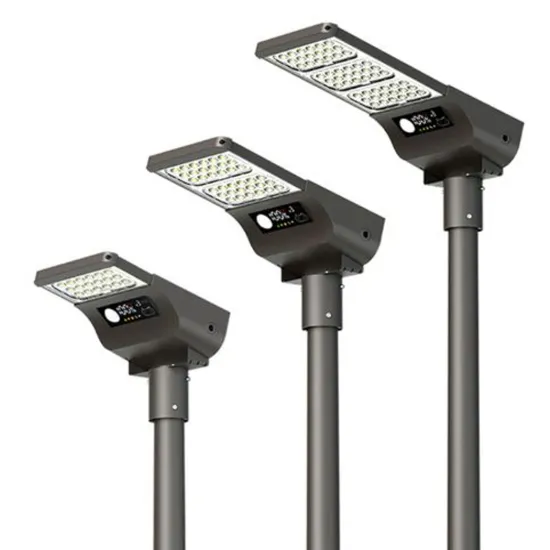
Vista suits schemes that need smarter control and lower-to-mid scale street lighting
Vista is likely to be the better fit where the council wants more on-unit information, more adjustable behaviour and easier compatibility with standard street-light poles. Across the range, Omnisolar lists features such as rain-sensing, CCT switching between 3000K and 5700K, personalised lighting modes, remote control and an LED status screen. The three versions cover 3000, 6000 and 9000 lumens, with stated install heights of 3, 4 and 5 metres respectively.
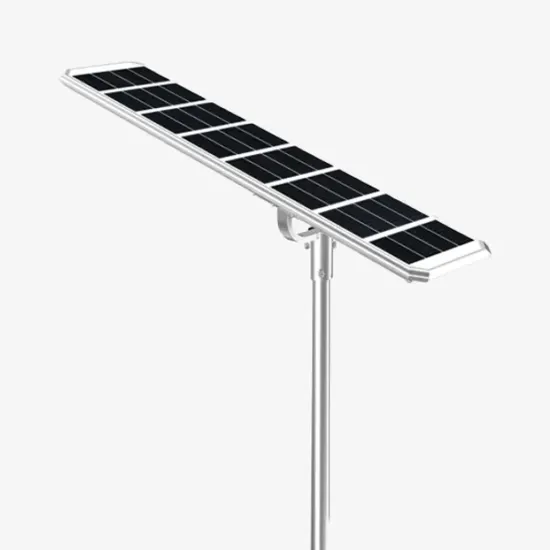
Venus Pro suits schemes that need stronger output and larger-scale coverage
Venus Pro is the better starting point where the project needs more output and a more heavy-duty specification. The LAMPS page and Omnisolar materials position it for roads, wider pedestrian routes, perimeter areas and broader site lighting applications. The uploaded sheets list 4000, 8000 and 12000 lumen versions, with stated install heights of 4, 8 and 12 metres depending on model.
What about installation costs compared with mains-powered street lights?
The safest way to explain the comparison is this: solar street lights can reduce or remove the need for trenching, cable runs and electricity supply to each fitting location, which can make them attractive where civils and power infrastructure would otherwise add cost and delay. That is often the main commercial argument, not just the product price on its own.
For councils, the value is often strongest where the site is awkward, spread out, or expensive to cable. On a simpler site with existing infrastructure already in place, the difference may be smaller. That is why a blanket “solar is always cheaper” claim would be misleading. It is better to assess the scheme based on layout, lighting level, foundations, access, backup needs and maintenance expectations.
Do solar street lights work in the UK in winter?
They can, provided the product is designed and specified for UK conditions and the site itself is suitable. This is one of the reasons Omnisolar’s positioning matters. The Vista and Venus Pro materials both highlight heated battery technology and “works in winter” messaging, rather than presenting the fittings as fair-weather products only.
That still does not remove the need to choose the right model. Light output, battery capacity, panel size, operating mode and expected autonomy all affect winter performance. On the uploaded sheets, Vista models are listed with more than 36 hours of lighting for rainy days, while the Venus Pro sheets list 10 days for rainy periods, which is clearly a much more resilient profile for larger or more demanding schemes.
Can solar street lights replace existing mains-powered lights?
In some cases, yes. They can be a suitable replacement option where a council wants to avoid replacing old cabling or extending mains infrastructure, or where a route needs lighting added without major groundwork. That said, replacement should never be treated as automatic. Column height, spacing, required light distribution, local planning context and the purpose of the route all need to be checked first.
Some Omnisolar product materials also point to backup charging features. The uploaded Venus Pro-2H and Venus Pro-4H sheets explicitly list an AC adapter and charging conditions based on battery state. The Vista sheets reference charging-adapter and backup-battery charging indicators on the LED display. For that reason, if backup charging is important to the project, it is best to confirm the exact model setup before ordering rather than assuming every version behaves in the same way.
What about dark skies, light pollution and planning concerns?
This needs careful wording. A solar street light is not automatically “dark-sky compliant” just because it is solar. GOV.UK guidance makes clear that lighting in protected dark-sky areas or intrinsically dark landscapes needs to be carefully assessed for necessity and degree, and that getting the right light in the right place at the right time matters.
For parish councils, that means the right approach is to assess beam pattern, brightness, colour temperature, column position, operating hours and whether dimming or lower-impact lighting levels would be more appropriate. In practice, that can make controllable products more useful than fixed-output fittings, but the site and planning context still come first.

What makes Omnisolar Vista useful for councils?
Vista is not just a basic all-in-one fitting. It is a more controllable family designed for buyers who want to see what the light is doing and adjust it more easily. The LED screen content listed on the sheets includes battery-life display, low-battery warning, lighting mode indication, external solar charging indicator, charging-adapter status, backup-battery charging indicator, PIR on/off status and rain-sensor display.
For councils managing multiple fittings, that kind of on-unit feedback can be genuinely useful. So can the three till-dawn modes, PIR-based operation and CCT switching. It gives a route to more tailored lighting behaviour instead of one fixed pattern for every site.
What makes Omnisolar Venus Pro useful for councils?
Venus Pro is the stronger option where the brief is more demanding. The range is built around higher output, marine-grade aluminium construction, replaceable batteries, interchangeable components and a charge-level indicator. That combination makes it relevant not only for first installation but also for longer-term asset management, especially on larger or more exposed external schemes.
The uploaded sheets also show a more substantial resilience profile than the Vista range, with 10-day rainy-period performance listed across the Venus Pro models. For councils concerned about winter and poor-weather operation, that is the kind of specification detail worth paying attention to.
When a parish council should seriously consider solar street lighting
Solar street lighting is often a strong option when a council is dealing with one or more of the following:
- a route that currently has no power supply
- a project where trenching would be disruptive or expensive
- an amenity or public-realm improvement scheme
- a phased lighting project where flexibility matters
- a location where ongoing electricity use is under scrutiny
- a need for faster installation than a fully mains-led scheme might allow
It is also a sensible category to look at where the council wants a cleaner installation format and wants to compare modern solar options against replacing older mains-powered fittings and infrastructure.
View the Omnisolar ranges at LAMPS
If you are comparing options for a parish council or local-authority scheme, start with the Omnisolar range at LAMPS, then look at the Vista range for more control-led installations and the Venus Pro range for stronger-output schemes.
If you want help choosing the right model for the site, contact LAMPS. Trade customers can also apply for a trade account.
When solar street lights may not be the right fit
Solar street lights are not the right answer for every site. Heavy shading, unusually demanding lighting levels, difficult layouts and strict project requirements can all point towards a mains-powered scheme instead. The key is choosing the right product for the right location rather than treating solar as a one-size-fits-all solution.
Frequently asked questions about Omnisolar solar street lights
Are solar street lights worth it for parish councils?
They can be, especially where mains power is difficult or expensive to extend. The main value is often reduced trenching, reduced cabling and lower ongoing electricity use at the fitting, rather than the fitting price alone.
Do solar-powered street lights actually exist for real public projects?
Yes. Omnisolar markets dedicated street-light ranges rather than only small amenity products, and its HMP Lancaster Prison case study describes a project that went on to use 26 Vista lights after a pilot period.
Do Omnisolar solar street lights work in the UK?
They are designed and marketed for UK use, with both Vista and Venus Pro materials highlighting heated battery technology and winter-ready positioning. As with any lighting scheme, correct model selection and site suitability still matter.
What happens after cloudy days or poor weather?
The uploaded Vista sheets list more than 36 hours of lighting for rainy days. The uploaded Venus Pro sheets list 10 days for rainy periods. The right choice depends on how demanding the installation is and how much resilience the site needs.
Can Omnisolar street lights connect to mains as backup?
Some models clearly show backup-charging capability in the supplied materials. Venus Pro-2H and Venus Pro-4H list an AC adapter and charging conditions tied to battery state. Vista sheets reference charging-adapter and backup-battery charging indicators on the LED screen. For project-critical backup charging, confirm the exact model specification before purchase.
How long do Omnisolar solar street lights last?
The supplied materials do not give one simple universal lifespan figure for the whole range, so it is better not to guess. What they do show is a 3-year warranty across the uploaded Vista and Venus Pro sheets, plus replaceable batteries and interchangeable components on relevant models, which supports maintainability.
Are solar street lights always cheaper than mains-powered lights?
No. They can be more cost-effective on the right site, particularly where cabling and civils would be expensive, but total project cost still depends on layout, columns, foundations, backup requirements and lighting levels.
Are they suitable for dark-sky areas?
Possibly, but not automatically. GOV.UK guidance says lighting in protected dark-sky areas or intrinsically dark landscapes needs careful assessment for necessity and degree. Output, beam control, colour temperature, placement and operating hours all need to be considered.
Which Omnisolar range should a council start with?
Start with Vista if the scheme needs more user control, visible status information and lower-to-mid scale output. Start with Venus Pro if the scheme needs higher output, larger-scale coverage and stronger rainy-period resilience.
What are the disadvantages of solar street lights?
The main disadvantage is that solar street lights are not the right fit for every site. Heavy shading, demanding lighting levels, difficult column spacing and very specific planning requirements can all make a mains-powered scheme more suitable. Solar also needs the right product choice for the location, rather than a one-size-fits-all approach.
For Omnisolar specifically, the range is built to handle UK conditions, but the correct model still matters. Vista is more suited to lower-to-mid scale installations with more user control, while Venus Pro is the stronger option for higher-output and larger-scale schemes. If the site is awkward or the brief is demanding, it is worth checking layout and backup requirements before choosing a product.
When are solar street lights not the right fit?
Solar street lights are less likely to be the best option where the site has significant shading, unusually high output requirements, strict lighting-performance targets or a layout that favours an existing mains-powered infrastructure. They can still be considered, but they should not be treated as an automatic replacement in every case.
Are solar street lights bright enough for public areas?
They can be, but it depends on the model and the application. The Omnisolar Vista range covers 3000, 6000 and 9000 lumens, while the Venus Pro range steps up to 4000, 8000 and 12000 lumens. That gives a spread from smaller public-realm routes through to larger and more demanding external areas.
Do solar street lights need direct sunlight?
No, but they do still need suitable access to daylight and should be specified properly for the location. In practice, nearby trees, buildings and other shading factors need to be assessed before choosing a model. Solar lighting is strongest where the fitting can get consistent charging conditions across the year.
Can Omnisolar solar street lights work during long periods of poor weather?
They are designed with poor-weather resilience in mind, but the level of resilience varies by range. The uploaded Vista sheets list more than 36 hours of lighting for rainy days, while the uploaded Venus Pro sheets list 10 days for rainy periods. That makes Venus Pro the better starting point where longer autonomy is a key concern.
Can Omnisolar solar street lights connect to mains as backup?
Some Omnisolar materials clearly point to backup charging features. Venus Pro-2H and Venus Pro-4H list an AC adapter and charging conditions linked to battery state, while the Vista sheets reference charging-adapter and backup-battery charging indicators on the LED display. If mains backup is important for the scheme, confirm the exact model setup before ordering.
Do Omnisolar solar street lights need much maintenance?
They are designed to be practical for outdoor use, but they are not maintenance-free. What is useful about the Omnisolar ranges is that the supplied materials refer to replaceable batteries, interchangeable components and visible status information on relevant models, which can help with long-term management and fault awareness.
Can solar street lights be installed on standard street light poles?
Omnisolar Vista is specifically described as compatible with standard street light poles on the supplied product sheets, which is a useful point for retrofit-style or simpler installation scenarios. Model suitability should still be checked against the exact pole and scheme requirements.
What warranty do Omnisolar Vista and Venus Pro street lights have?
The uploaded Vista and Venus Pro sheets show a 3-year warranty. If you want to state warranty in the blog, 3 years is the safe wording to use based on the current supplied documents.
Why are solar street lights attractive for parish councils?
The main appeal is usually reduced installation disruption and reduced dependence on new mains cabling. That can make them a practical option for paths, public-realm routes, parks, access roads and communal spaces where power is awkward or expensive to extend.